
Choosing between stainless steel and zinc alloy determines a custom jewelry collection’s structural durability, unit weight, manufacturing cost, and design flexibility. Stainless steel delivers superior corrosion resistance and strength for high-wear daily pieces. Zinc alloy offers exceptional versatility for intricate 3D casting and cost-sensitive fashion lines. Evaluating these physical and logistical differences helps commercial importers and private-label brands select the right material for efficient production.
Physical Characteristics and Structural Comparison
The structural properties of stainless steel and zinc alloy dictate how custom jewelry pieces are formed, finished, and worn:
- Stainless Steel (316L/304): Formed primarily through stamping, machining, or lost-wax casting. Stainless steel is dense, highly durable, and naturally resistant to rust, tarnish, and scratches under daily stress.
- Zinc Alloy: Formed via high-precision pressure die casting. Zinc alloy features a lower melting point, allowing high-detail fluid casting, smooth surfaces, and low unit weight for larger pieces.
Stainless steel provides a substantial feel and excellent wear resistance, while zinc alloy excels at producing complex, lightweight geometric shapes without adding excess material weight.
Design Capabilities and Casting Complexity
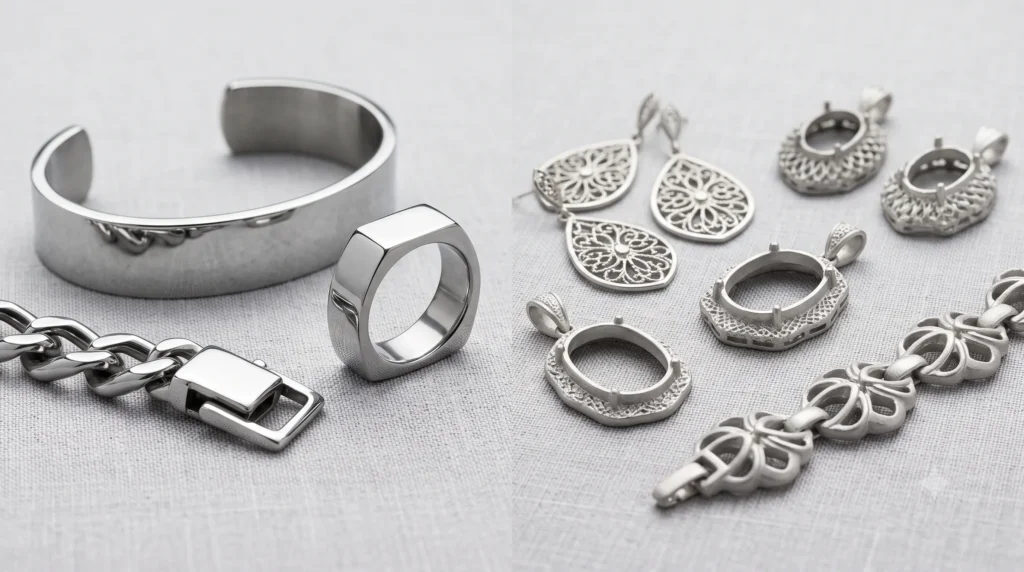
Design complexity often drives material selection in OEM and ODM development. Zinc alloy fluidly fills detailed molds, making it an ideal choice for intricate statement earrings, textured pendants, elaborate brooches, and multi-layered charms. It allows designers to create bold, volumetric shapes that remain comfortable for everyday wear.
Conversely, stainless steel suits minimalist aesthetics, crisp geometric profiles, and high-wear components. Because stainless steel is significantly harder than zinc alloy, it resists deformation, making it ideal for sleek unisex designs, functional spring clasps, watch bands, rigid bangles, and everyday chain necklaces.
Plating, Corrosion Resistance, and Market Positioning
Surface finishing directly impacts the visual presentation and long-term durability of fashion jewelry:
- Finishing and Coating: Stainless steel often utilizes Physical Vapor Deposition (PVD) coating for long-lasting color retention and scratch resistance. Zinc alloy typically undergoes multi-layer electroplating followed by a protective e-coating layer to help improve tarnish resistance.
- Skin Sensitivity Considerations: Surgical-grade stainless steel (316L) is widely recognized for its low reactivity, making it a preferred choice for sensitive skin categories. Zinc alloy components require strict adherence to nickel-compliant and lead-compliant plating standards to help minimize irritation risks.
- Tooling and Cost Efficiency: Tooling molds for zinc alloy are fast and economical to produce, making sampling efficient for fast-fashion collections. Stainless steel requires higher tooling precision, making it better suited for long-running core collections.
Commercial buyers can evaluate custom jewelry options or inspect specialized custom earrings to determine the optimal material composition for upcoming market releases.
Frequently Asked Questions
Which base metal is better for oversized or heavy jewelry designs?
Zinc alloy is preferred for oversized designs because die-casting allows for thin-walled, hollow structures that keep the piece lightweight and comfortable to wear.
Can stainless steel and zinc alloy use the same plating processes?
No. Stainless steel commonly uses PVD vacuum coating for enhanced surface durability, whereas zinc alloy requires multi-layer electroplating sealed with an protective e-coating layer.
How do tooling costs compare between stainless steel and zinc alloy?
Zinc alloy molds generally involve lower initial tooling costs and faster turnarounds, whereas stainless steel tooling requires higher initial investment due to the hardness of the material.
Ready to optimize your next production run? Contact yungshangJewelry today to request material recommendations, technical consultations, and commercial OEM quotations for your brand.