
Choosing the right materials for custom earrings involves evaluating base metals, surface finishes, skin sensitivity standards, and target market requirements. Importers and private-label brands must balance aesthetic detail, structural weight, corrosion resistance, and manufacturing costs to develop successful collections for commercial distribution.
Key Considerations for Earring Base Metals
Selecting an ideal base metal requires a thorough understanding of weight, strength, and processing options. Unlike rings or pendants, heavy earring components cause earlobe fatigue, making lightweight alloys or hollow structures preferable for larger statement pieces.
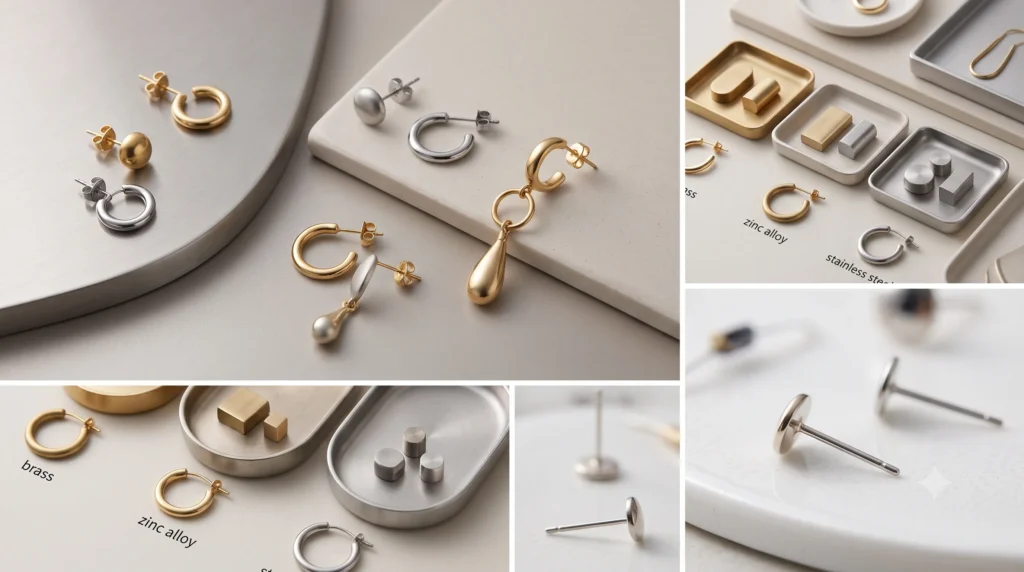
Brass is a popular choice for custom fashion earrings due to its workability and smooth surface finishing. It allows for detailed casting and accepts various plating layers effectively, though it requires protective coatings to prevent oxidation.
Zinc alloy is frequently chosen for cost-effective volume manufacturing. Its high fluidity in molten form makes it suitable for complex three-dimensional molds. However, zinc alloy is denser than brass, which can limit its use in larger, solid earring designs.
Stainless steel provides superior strength and natural resistance to corrosion and rust. It is widely used for modern, minimalist, and geometric earring collections. While harder to cast into intricate shapes, stainless steel holds fine details well when machined or stamped.
Sterling silver offers premium market appeal and natural hypoallergenic properties. As a softer metal, silver requires structural reinforcement on ear wire assemblies or earring posts to prevent bending during daily wear.
Plating Methods and Surface Durability
The longevity of custom earrings depends significantly on the surface treatment applied over the base metal. Commercial jewelry manufacturing relies primarily on two surface finishing techniques: traditional electroplating and Physical Vapor Deposition (PVD).
Standard electroplating deposits layers of gold, rose gold, or rhodium over brass or silver bases. Applying an electrophoretic lacquer, commonly known as an e-coating, over the plated surface provides a barrier against moisture and friction, which helps extend product shelf life during shipping and retail storage.
For stainless steel jewelry, PVD vacuum coating is the preferred process. PVD creates a durable bond within a vacuum chamber, producing strong resistance to daily wear, sweat, and tarnishing.
Managing Hypoallergenic and Compliance Standards
United States consumer product safety standards, such as California Proposition 65 and ASTM regulations, enforce strict limits on lead, cadmium, and nickel release in jewelry items. Earring posts and ear wires carry the highest risk of skin irritation because they remain in direct contact with skin tissue.
To lower the risk of allergic reactions, brands often specify surgical stainless steel (316L), titanium, or 925 sterling silver specifically for the post assemblies, even when the decorative front piece is cast from zinc alloy or brass. Partnering with experienced manufacturers like yungshangJewelry helps ensure raw material selection matches the compliance standards of your destination market.
Production Process from Concept to Quality Control
Bringing a custom earring project into mass production involves a structured, step-by-step approach:
- Design and CAD Evaluation: Technical assessment of wall thickness, weight distribution, and post attachment points.
- Material Selection: Choosing appropriate base metals and post alloys tailored to retail price targets and compliance mandates.
- Sampling and Testing: Producing physical prototypes to evaluate plating hue, structural integrity, and metal purity.
- Mass Production and Inspection: Batch casting, surface finishing, protective coating application, and manual quality checks.
Working directly with specialized production partners like yungshangJewelry allows private-label brands to streamline OEM/ODM sampling and maintain consistent output across production runs.
Frequently Asked Questions
Which base metal is suitable for lightweight statement earrings?
Brass and hollow stainless steel are suitable choices. Brass allows for thin-walled casting, while hollow electroforming techniques reduce total weight without sacrificing structural strength.
What post materials help lower the risk of skin irritation?
Surgical stainless steel (316L) and pure titanium are reliable choices for earring posts, as both materials demonstrate low nickel release rates.
What is the primary difference between PVD coating and electroplating?
PVD vacuum coating is applied in a vacuum chamber, creating a strong, wear-resistant layer mainly on stainless steel. Electroplating uses liquid chemical baths, making it ideal for brass and silver.
Ready to develop your custom earring collection? Contact yungshangJewelry today to submit your design specifications or request sample support.