What should a B2B buyer expect from a Wholesale Anklets & Foot Jewelry Manufacturer before requesting a quotation? The answer starts with a complete product brief, not a catalogue image. Anklets and foot bangles can vary considerably in base material, chain construction, dimensions, finish, decorative components and packaging. If those details are left open, supplier quotations may not describe comparable products.
For Australian buyers, the same principle applies whether the order is for a fashion jewellery range, private-label collection, seasonal assortment or promotional programme: define the target market, product requirements and any compliance needs in writing. The supplier can then confirm what it can quote, sample and document.
Which product specifications must the supplier be able to address?
A supplier should be able to respond to the specifications that determine product identity, cost and approval status. Send a reference image or drawing, but do not rely on visual similarity alone. The quotation should connect the image to measurable and written requirements.
| Specification area | Information for the RFQ | Confirmation to request |
|---|---|---|
| Material and components | Base metal, beads, pearls, crystals, stones, charms, clasps and any mixed materials | Exact material for each main component and any permitted substitution |
| Dimensions and fit | Finished length, extension chain, charm size, chain width, component thickness and target weight where relevant | Dimension drawing, tolerances and the measurement method |
| Finish and colour | Plating or surface finish, colour reference, polish or antique effect and required appearance | Finish description, approved colour reference and sample standard |
| Construction | Links, wire, jump rings, clasp type, soldered or assembled connections and adjustable features | Construction details and any points that affect durability or wearer comfort |
| Branding and packaging | Logo method, tags, cards, pouches, boxes, barcodes and carton requirements | Artwork format, packaging dimensions, packing quantity and labelling information |
Material and finish need separate confirmation
The broader YUNGSHANG product page lists common custom-jewellery material options including zinc alloy, copper, iron, stainless steel, 925 sterling silver, natural stone, acrylic and resin. That list should not be treated as confirmation that every option is available for every anklet. Ask the supplier to identify the material of the exact proposed SKU, including the clasp, chain, charm and decorative parts.
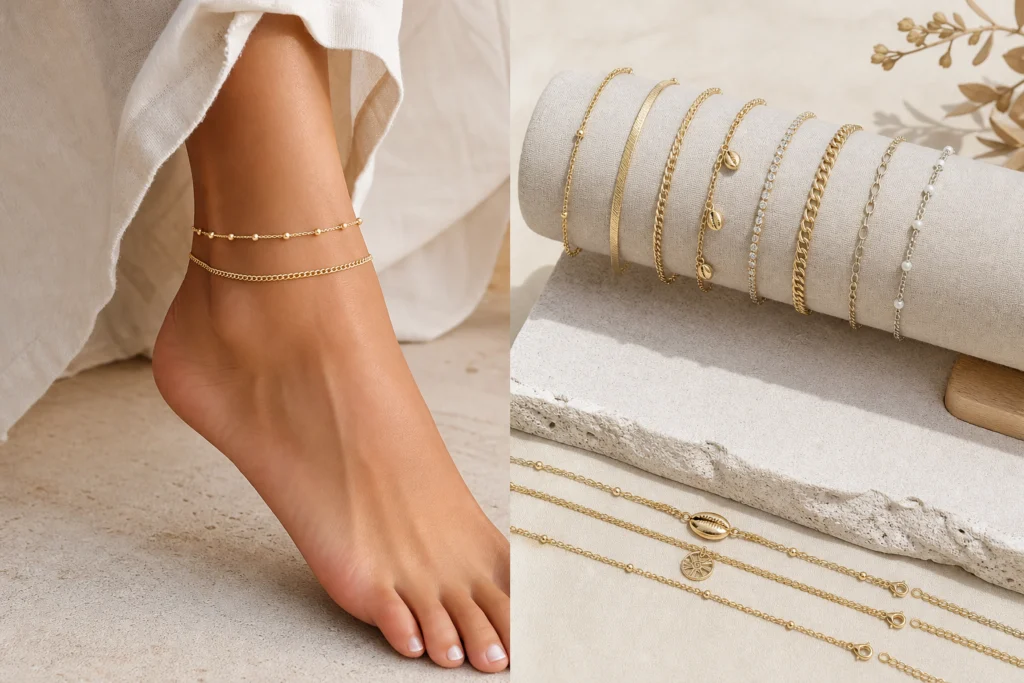
The anklet page shows examples described with materials and components such as iron, zinc alloy, plastic pearl, glass crystal, shell, malachite and cubic zirconia-style wording in product names. These catalogue examples help indicate the range of design directions, but they do not replace a product-specific specification sheet.
Dimensions affect both fit and buying decisions
An anklet quotation should distinguish between the nominal chain length and the finished wearable length. Confirm whether an extension chain is included, how the clasp is measured, and whether charms are positioned symmetrically or asymmetrically. For foot bangles or other foot jewellery, ask for a drawing that shows the intended wearing position and attachment points. These details reduce ambiguity during sampling and make the approved sample easier to compare with bulk production.
Which samples, inspection records or documented processes support evaluation?
A sample is useful only when it is assessed against the same requirements that will appear on the purchase order. The buyer should retain the approved sample, reference images, drawings, finish references and packaging artwork as one approval set.
YUNGSHANG’s broader products page describes a sourcing workflow that includes sample review, material selection, logo and packaging discussion, quotation, an estimated lead time, pre-production sample approval, final inspection, packing details and shipping documents. This is a published process description. Buyers should still ask which documents are available for the specific order and at which stage they will be supplied.
Use the sample stage to check more than appearance
- Compare the sample with the drawing for length, chain width, charm position and closure details.
- Check plating or surface colour under consistent lighting and record the approved reference.
- Inspect links, jump rings, clasps and attachment points for visible gaps or movement that does not match the agreed construction.
- Review comfort-related details, including sharp edges, exposed wire and the placement of heavier charms.
- Approve packaging separately so the product sample and the packed presentation are both documented.
Ask for evidence with a defined scope
Useful records may include a sample approval record, material declaration, dimensional inspection sheet, visual inspection checklist, packaging confirmation and dispatch documentation. The request should identify the SKU, sample version, date and order quantity. A general statement about quality control is less useful than a document tied to the goods being purchased.
The broader product page states that selected jewellery component samples have passed lead, cadmium and nickel release testing, while also limiting the statement to tested samples. It does not establish the same result for every anklet, finish, production lot or future order. If such testing is relevant to the target market, request the applicable report and verify that the tested sample matches the proposed product and materials.
What should be confirmed before requesting a quote or placing an order?
Before seeking a firm quotation, assemble the information that changes the supplier’s calculation. The supplier’s anklet page specifically asks buyers to send the category, material and quantity, with logo or packaging notes where needed. The broader products page also advises sending product photos, drawings or reference links, together with the target finish, target market, packaging method and compliance needs.
- Prepare the product brief. Include photos or drawings, material requirements, dimensions, finish, decorative components, logo instructions and packaging details.
- State the commercial scope. Identify the quantity by SKU, sample quantity, destination market, shipping destination and any required delivery window.
- Request a written quotation. Ask it to identify the exact product description, material, finish, packaging, tooling or sampling charges if applicable, shipping basis, payment terms and quotation validity.
- Resolve open specifications. Obtain written answers for substitutions, tolerances, colour references, packaging changes and any compliance documentation before approval.
- Approve the pre-production standard. Keep a dated record of the approved sample, artwork and specification so later inspection has a clear reference.
- Match documents to the order. Confirm what final inspection, packing and shipping documents will accompany the shipment and who is responsible for checking them.
Do not compare quotations on unit price alone
Two anklet quotations are not comparable if one includes a finished branded package and the other covers a loose product, or if one specifies a defined metal and finish while the other uses broad wording. Compare the complete product definition, sample status, packaging scope, order quantity, delivery assumptions and documentation requirements.
What the available supplier information shows—and what it does not
YUNGSHANG’s anklet page presents the business as a Qingdao jewellery and craft gifts factory and describes B2B sourcing, sampling, packaging and RFQ support. It lists anklet and foot bangle designs in different visual styles, including chain, bead, pearl, crystal, charm and mixed-material examples. The page also mentions multiple materials, finishes and private-label packaging options.
Those pages provide a starting point for an inquiry, not a complete purchasing specification. The supplied information does not state product-specific minimum order quantities, prices, dimensional tolerances, production lead times, or a universal compliance result for all anklets. Those points should be confirmed in the quotation and supporting documents for the exact design.
A strong supplier evaluation therefore has three outputs: a measurable product specification, an approved sample with traceable records, and a written commercial document that matches the goods to be ordered. That standard gives procurement teams a clearer basis for comparing responses and reducing avoidable revisions.
Frequently Asked Questions
Which product specifications should I send to a wholesale anklet manufacturer?
Send product photos or drawings, material and component requirements, finished length, extension chain, clasp, charm dimensions, finish or plating colour, quantity, logo instructions, packaging method and target market. Ask the supplier to confirm the exact material and construction for the proposed SKU.
What sample and inspection evidence should a B2B buyer request?
Request a product sample, dated approval record, material information, dimensional or visual inspection records, packaging confirmation and relevant shipping documents. Any test report should be matched to the exact tested sample, material and product scope.
What should be confirmed before requesting a quotation?
Confirm the product category, reference design, material, finish, dimensions, quantity by SKU, packaging, logo requirements, destination market and compliance needs. This gives the supplier enough information to prepare a more comparable written quotation.
Does the available YUNGSHANG information confirm compliance for every anklet?
No. The broader product page states that selected jewellery component samples passed lead, cadmium and nickel release testing and limits that statement to tested samples. Buyers should request documentation for the specific product and intended market rather than extending the claim to all anklets.