
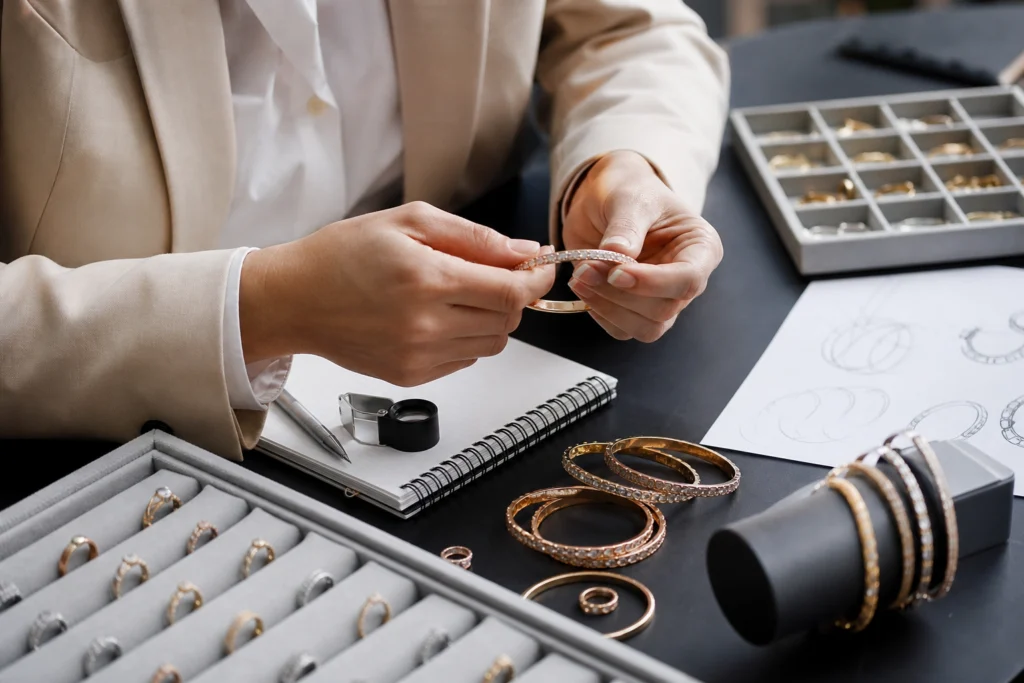
Can a supplier make the bracelet, ring or bangle your range requires—and document exactly what will be supplied? That is the central question for B2B buyers. Fashion jewellery can look convincing in a catalogue image while differing materially in size, base metal, coating, closure construction, stone setting, packaging or batch consistency.
For Australian procurement teams, a useful supplier assessment starts with a product brief rather than a broad request for “custom jewellery”. The brief should allow both sides to identify whether the item is feasible, what must be sampled, and which requirements need written approval before production begins.
Start with the product category and intended use
Bracelets, rings and bangles have different technical risks. A chain bracelet depends on link finish, clasp operation and attachment strength. A rigid bangle depends on inside diameter, opening method and edge finish. A ring requires a defined size range, band profile and tolerances that account for the chosen material and construction.
Separate fashion-led decisions from non-negotiable requirements. Colour direction, charm selection and display packaging may be commercial choices. Material declaration, dimensions, sharp-edge control, logo placement and target-market requirements should be controlled specifications.
Build a specification sheet that can be quoted
Send a drawing where possible, but photographs and reference links can also be useful at the initial stage. The supplier’s product page asks buyers to provide photos, drawings or reference links together with target material and finish. A meaningful quote still depends on converting those references into measurable requirements.
- Product construction: bracelet, cuff, chain, beaded bracelet, bangle, ring or watch accessory; fixed or adjustable design; clasp or opening mechanism.
- Materials: state the required base material, decorative components and any material exclusions. Do not use a colour name as a substitute for a material specification.
- Dimensions: include inside diameter for bangles, circumference or adjustable range for bracelets, ring sizes, band width, component dimensions and target weight where relevant.
- Surface finish: define colour, plating or coating description, texture, polish level and whether slight finish variation is acceptable.
- Assembly details: identify stones, beads, resin, enamel, charms, jump rings, settings, solder points and moving parts. These features often drive sample review and inspection points.
- Branding and packaging: specify logo artwork, placement, hang tags, cards, pouches, barcode needs, carton marks and any retailer presentation requirements.
- Market and compliance requirements: tell the supplier the intended market and the requirements your organisation needs addressed. A supplier cannot reliably plan materials, documents or testing discussions from a product image alone.
The published YUNGSHANG product information lists bracelets, beaded bracelets, rings, bangles and watch accessories, and describes OEM and packaging support. It also lists a range of material options across its jewellery offering, including zinc alloy, copper, iron, stainless steel, 925 sterling silver, natural stone, acrylic and resin. Buyers should confirm the actual material and finish available for each proposed design in writing; a general material list is not a specification for a particular SKU.
Which product specifications must the supplier be able to address?
A capable wholesale bracelets, rings and bangles manufacturer should be able to respond to the full brief, flag unclear details and distinguish an estimate from a confirmed production specification. The supplier should not need to infer ring size, bangle fit, plating colour, logo position or packaging format from an inspiration image.
For rings, ask how sizes will be expressed and how size variation will be evaluated. For bangles and cuffs, define the wearer opening and internal dimensions, particularly where the silhouette is rigid. For bracelets, record both total length and usable length after the clasp, extender or end fittings are included.
Material terminology needs equal care. “Gold”, “silver” and “antique” may describe a visual finish in a buying conversation, but procurement documentation should state the base material and the finish required. Where components such as natural stone, resin or acrylic are involved, approve the appearance range that is commercially acceptable. Natural and hand-finished materials can vary; the buyer should decide whether that variation is a feature or a defect before sampling.
Which samples, inspection records or documented processes support evaluation?
Samples are decision tools, not merely sales pieces. Request a sample plan that identifies what it represents: visual concept, material confirmation, fit check, packaging mock-up or pre-production approval. One sample may not answer every question, especially when several finishes, sizes or branded pack formats are planned.
Before bulk production, assess the approved sample against a written checklist. Check dimensions, finish, colour, logo, construction, moving parts, component placement and packaging. If a change is accepted during review, revise the specification and preserve a dated approval record. Verbal approval is difficult to audit when a later shipment differs.
Ask the supplier what inspection records can be supplied for the order. The suitable record depends on the product and agreement, but may cover quantity, visual appearance, dimensions, functional checks on clasps or adjustment mechanisms, packing and carton identification. Define the acceptance criteria first. A record stating that an item was inspected is of limited use unless it identifies the product, lot or order, inspection scope, result and any disposition of non-conforming goods.
YUNGSHANG’s published process describes receiving a quotation and sample plan, approving a pre-production sample before bulk production, then reviewing final inspection, packing details and shipping documents before dispatch. This is a stated process, not independent evidence of results for a particular order. Buyers should confirm the records, approval points and inspection scope that will apply to their own purchase order.
Keep testing claims tightly scoped
Testing may be relevant to material or market requirements, but it must be evaluated by product, component, laboratory report and test scope. YUNGSHANG states that selected jewellery component samples have passed lead, cadmium and nickel-release testing, and explicitly limits that statement to tested samples. That does not establish that every bracelet, ring or bangle meets the same requirements.
When testing is needed, request the applicable report or agree a testing plan for the actual material, finish and component configuration being purchased. Confirm the report holder, sample identification, test method, date, scope and whether the tested sample matches the proposed production item. Procurement teams should obtain appropriate regulatory and technical advice for their target market rather than treating a general testing statement as universal compliance evidence.
What should be confirmed before requesting a quote or placing an order?
A fast RFQ is possible when the buyer supplies enough information to avoid assumptions. The supplier’s website requests product category, material and quantity, with logo and packaging notes where needed; its broader quotation guidance also identifies size, colour or plating, target market and packaging method. These are sensible minimum inputs for an initial discussion.
- Lock the RFQ brief: provide artwork, product references, material and finish requirements, dimensions or size range, quantity by SKU, packaging and delivery destination.
- Define commercial assumptions: ask what is included in the quote, what is provisional, the currency, payment terms, shipping basis and the validity period. Do not assume tooling, samples, testing, labels or freight are included unless stated.
- Agree the sample route: identify who approves the sample, the approval deadline, any permitted variation and what happens if changes are requested.
- Set quality and documentation expectations: state inspection criteria, acceptable defect thresholds if applicable to your agreement, packing configuration, carton marks and documents required before dispatch.
- Issue a complete purchase order: ensure the PO, approved sample reference, artwork version, specification sheet and agreed quotation do not conflict.
The most reliable supplier relationship is built on controlled information. Clear specifications reduce avoidable rework; samples reveal design and construction questions before volume production; documented approvals give both buyer and supplier a common production reference. For related accessory sourcing considerations, see the wholesale anklets and foot jewellery manufacturer evaluation guide.
Related resources
Frequently Asked Questions
What should be included in an RFQ for wholesale bracelets, rings and bangles?
Include product images or drawings, product category, required material and finish, dimensions or ring-size range, quantity by SKU, logo artwork, packaging requirements, target market and delivery destination. State whether sampling, testing, inspection records or shipping documents are required.
Why is a pre-production sample important for fashion jewellery?
It gives the buyer and supplier a controlled reference for appearance, construction, fit, finish, branding and packaging before bulk production. Any approved changes should be recorded in the final specification or sample approval record.
Does a component test report prove that every jewellery item is compliant?
No. A report applies only to the identified tested sample, scope and conditions. Buyers should check whether the tested material, finish and component configuration match the item being purchased, and obtain advice on applicable target-market requirements.
What dimensions matter most for bangles, bracelets and rings?
For bangles, record internal diameter, opening and profile. For bracelets, specify total and usable length, clasp type and adjustable range. For rings, define the sizing system, size range, band width and profile. Include tolerances where they matter to fit or retail presentation.